Washington Just Turned AI Models Into a Controlled ExportAnd the rules are still being written.
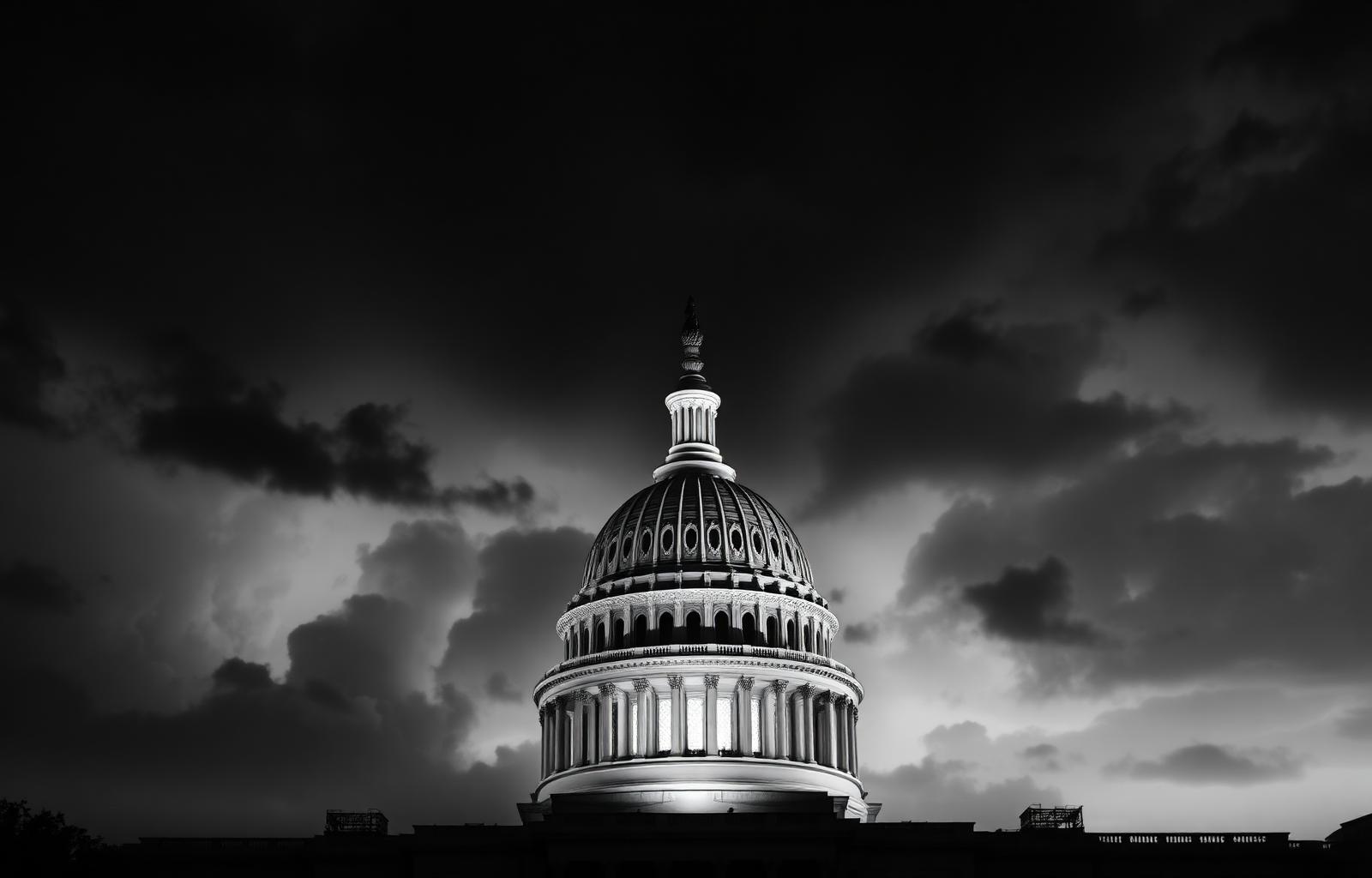
“The United States has begun treating the world’s most powerful AI models the way it has long treated advanced semiconductors and cryptographic systems: as dual-use technology subject to government control.”
The United States has begun treating the world’s most powerful AI models the way it has long treated advanced semiconductors and cryptographic systems: as dual-use technology subject to government control. What started as a voluntary framework in June has already resulted in one company being ordered, with 90 minutes’ notice, to cut off foreign access to its most capable model.
From Voluntary Framework to Emergency Order
On 2 June 2026, the White House signed Executive Order 14409, “Promoting Advanced Artificial Intelligence Innovation and Security.” On paper, the order was framed as collaborative rather than restrictive: it created a voluntary mechanism inviting AI developers to submit their most capable, soon-to-be-released models to a group of federal agencies for review up to 30 days before public launch. The order had been through at least one earlier draft, pulled back in May over concerns it would hamper US competitiveness.
That posture didn’t last long. Just ten days after the executive order was signed, the US Department of Commerce, under Secretary Howard Lutnick, invoked its export control authority to order a leading AI developer to suspend all foreign national access to two of its most advanced models. The directive followed a report that a jailbreak-style exploit could be used to bypass the models’ built-in safety guardrails and trick them into identifying cybersecurity vulnerabilities in critical infrastructure systems. According to reporting, the company was given roughly 90 minutes to comply. It responded by disabling access to its most powerful models for all customers while formally disputing the government’s underlying security concerns.
A New Category of Controlled Technology
What makes this moment structurally significant is less the individual incident and more the precedent it set. US Commerce officials have begun applying export-control-like restrictions to frontier AI models in a manner similar to how the government has long controlled high-end semiconductors and cryptographic technology. One week after the initial order, Commerce issued a follow-up letter exempting a defined group of “trusted partners” from the license requirement for one of the two restricted models, while leaving the second model’s restrictions in place.
Legal analysts tracking the episode describe it as a genuine policy inflection point — a shift from fostering AI innovation toward active government restriction and monitoring of frontier models on national security grounds. Analysts note Commerce’s approach leaves room for further, more precisely tailored controls in future, potentially including a formal export control classification specifically for AI models.
Building the Formal Review Process
Beneath the emergency actions, Executive Order 14409 also set a slower, more structural process in motion. Section 3 of the order directed the Secretary of the Treasury, the Secretary of War acting through the Director of the National Security Agency, and the Secretary of Homeland Security acting through the Director of CISA, in consultation with several other federal offices, to design a classified benchmarking process within 60 days. That process is intended to formally designate which “covered” frontier models possess advanced cyber capabilities warranting government review, with up to 30 days of pre-release federal access before public launch.
The 60-day deadline landed on 1 August 2026 — a deadline for the government to finish designing the framework, not a compliance deadline for AI companies. Reporting in late July indicated a draft framework had already been circulated to OpenAI, Anthropic, and Google. The order separately requires the Office of Personnel Management to expand federal hiring for cybersecurity specialists within the same window.
Why Foreign Nationals Are the Flashpoint
A recurring feature of the restrictions imposed so far is their focus on foreign national access specifically, rather than blanket public availability. This mirrors, in structure, the logic of existing US export control regimes for advanced semiconductors, where the concern is less that a technology exists and more that it could reach adversarial state actors.
This creates a genuinely novel compliance challenge for AI companies with global customer bases and globally distributed workforces. A company required to restrict “foreign national” access to a model must build technical and organisational infrastructure capable of enforcing that restriction reliably — verifying user citizenship and location — in a way most AI products were never originally designed to do.
The Wider Industry Reaction
Industry response has been notably mixed. Some voices within affected companies have pushed back forcefully on the substance of specific orders, while broadly acknowledging the legitimacy of government interest in frontier model safety. Geopolitical analysts have situated the episode within a broader trend of diminished enforcement of multilateral trade frameworks alongside rising geopolitical risk globally, making further unilateral national restrictions on advanced AI increasingly likely rather than a one-off event.
What This Could Mean for Ireland
For a country whose economic model depends heavily on hosting the European operations of major US technology and AI companies, this shift in Washington’s posture carries real practical weight. Irish-based teams within US AI companies may find themselves directly subject to the same “foreign national” access restrictions now being imposed at short notice — a genuinely new category of operational risk for firms built out of Dublin, Cork, and elsewhere in Ireland. Ireland’s own AI Office, becoming operational in August 2026, and the wider EU AI Act enforcement apparatus will need to navigate a landscape where the US now treats frontier AI capability as subject to unilateral national security control — potentially creating friction between US export restrictions and EU obligations for companies operating across both jurisdictions from an Irish base. Ireland’s positioning as a trusted, stable home for AI operations in Europe may become more valuable if American regulatory unpredictability pushes companies to want at least one jurisdiction in their footprint with clearer, more consultative rules.
The Bottom Line
In the space of a single month, the United States moved from proposing a voluntary, cooperative review framework for frontier AI models to issuing an emergency 90-minute compliance order restricting foreign access to two of the most capable AI systems in the world. The formal classified benchmarking process due under Executive Order 14409 is designed to make this kind of intervention more predictable and rules-based going forward — but as of early August 2026, AI developers and the countries that host their operations are still learning the rules in real time, often through enforcement actions rather than published guidance.
AI & Innovation Pulse is an independent Irish digital title covering artificial intelligence and innovation. Every piece is written in-house, editorially independent, and verified.