The World Just Got Its First AI Scientific PanelAnd Ireland has a front-row seat.
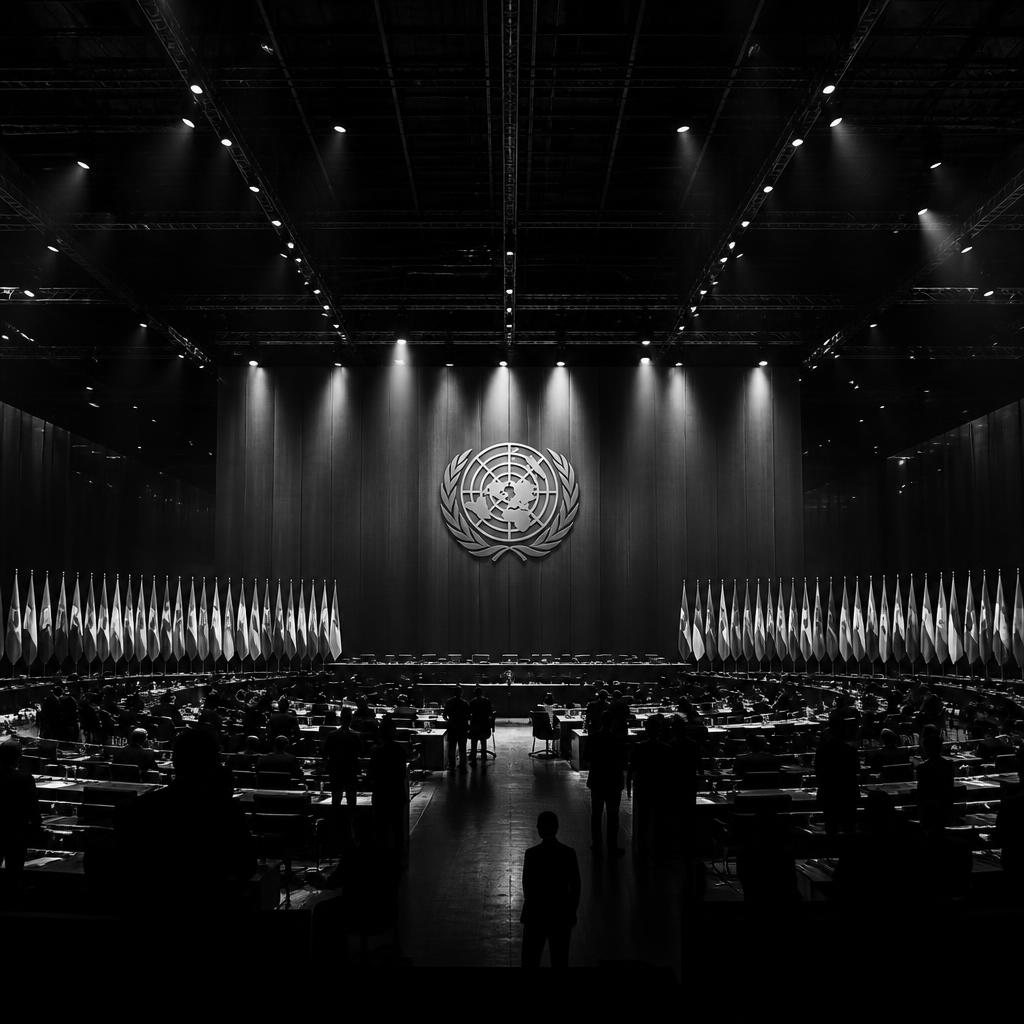
“This week the UN convenes governments from around the world to confront a question no single country can answer alone: who governs an intelligence that respects no borders?”
Ireland, host of Europe’s own AI summit later this year, is watching closely — and has skin in the game.
A First-of-Its-Kind Global Gathering
On 6 and 7 July 2026, Geneva hosts something that has never happened before: the inaugural UN Global Dialogue on AI Governance. Established by the UN General Assembly in August 2025 as part of the Global Digital Compact, the Dialogue brings together governments, UN agencies, civil society, academia, and industry to attempt what no single treaty or national law has managed — a shared, global starting point for governing artificial intelligence.
The event is being convened at Geneva’s Palexpo centre, deliberately timed alongside the AI for Good Global Summit and the World Summit on the Information Society. Co-chaired by the Permanent Representatives of El Salvador and Estonia, the Dialogue is structured around four thematic clusters: safe and trustworthy AI development, closing the AI capability gap between developed and developing nations, interoperability between different countries’ AI rules, and human rights, transparency and accountability.
Crucially, it isn’t a regulatory body. It has no power to pass binding law. What it does have is something arguably more foundational for this stage of AI’s development: a shared scientific baseline that every government in the room can work from.
The Report That’s Setting the Agenda
That baseline arrived days before the Dialogue opened, in the form of the first report from the UN’s Independent International Scientific Panel on Artificial Intelligence — a group of 40 experts drawn from across regions and disciplines, co-chaired by Turing Award-winning AI researcher Yoshua Bengio.
The panel’s core finding is blunt: AI capabilities are moving faster than either the science needed to understand them or the governance structures meant to manage them. The report catalogues both sides of that ledger. On the benefit side, it points to concrete progress already underway — AI systems have helped predict the structural shape of more than 200 million proteins, and are accelerating drug discovery, earlier cancer detection, and food-insecurity early-warning systems in the developing world. On the risk side, the panel highlights growing evidence of deceptive behaviour in advanced models, alongside deeper concerns about labour market disruption and the concentration of powerful AI systems in the hands of a small number of companies and governments.
The panel’s own framing is that AI is neither good nor bad by nature — the outcome depends entirely on the governance choices made in the years immediately ahead. That’s precisely the brief the Global Dialogue now has to work with.
Not Every Government Is on Board
The road to consensus is not smooth. In a UN Security Council debate held the day before the Dialogue’s launch, the United States voiced strong opposition to multilateral AI governance efforts of this kind, raising real questions about how much practical traction the Dialogue’s conclusions will have — particularly with the country home to most of the world’s frontier AI labs sitting outside the tent. Analysts tracking the process note that, much like the Internet Governance Forum before it, the Dialogue’s power will likely lie in agenda-setting and shared norms rather than enforceable rules — at least for now. A second session is already scheduled for New York in May 2027, suggesting this is intended as the start of a recurring process rather than a one-off event.
The Irish Connection
For Ireland, this week’s proceedings in Geneva aren’t a distant diplomatic story — they’re a preview of a role Ireland itself will play just three months from now. From 1 July to 31 December 2026, Ireland holds the rotating Presidency of the Council of the European Union, only its eighth time doing so since joining. As part of that Presidency, Ireland will host its own International AI Summit at the RDS in Dublin on 14 October 2026, officially launching European AI Innovation Month under the theme “Harnessing AI to Revolutionise Europe’s Competitiveness.”
The timing lines up deliberately. Where the UN’s Geneva Dialogue is about establishing shared global scientific and governance ground, Ireland’s October Summit is pitched squarely at the applied, economic side of the same conversation — showcasing how AI research translates into industrial adoption and competitiveness across Europe. Minister for Enterprise, Tourism and Employment Peter Burke has framed Ireland’s role explicitly around driving AI adoption among SMEs while strengthening Europe’s broader digital resilience.
Ireland’s position in this conversation is not incidental. The country hosts the EU establishment of sixteen of the world’s top twenty technology companies and eight of the leading foundation model providers, giving it a genuinely unusual concentration of frontier AI infrastructure for a country its size. That, combined with the Presidency, puts Ireland in the position of translating the kind of high-level global principles being debated in Geneva this week into the practical European rules and industry norms that will follow.
The Bottom Line
The UN’s first Global Dialogue on AI Governance marks the moment global AI policy stopped being a patchwork of national approaches and got its first shared scientific reference point — even if getting every major power to the table remains a work in progress. For Ireland, this week’s discussions in Geneva are the opening chapter of a story it will help write again in October, when the International AI Summit puts Dublin at the centre of Europe’s own attempt to turn AI principles into applied, competitive advantage. Few countries will spend 2026 this close to both ends of the AI governance conversation — the global framing, and the practical European follow-through.
AI & Innovation Pulse is an independent Irish digital title covering artificial intelligence and innovation. Every piece is written in-house, editorially independent, and verified.