Robots Below the Waves: UL Develops Offshore Wind Inspection TechnologyThe Irish-led MARINEX project combines underwater robots, a surface vessel and AI-assisted analysis to develop new ways of inspecting offshore infrastructure.
“The value comes from useful observations, not simply from getting a vehicle underwater.”
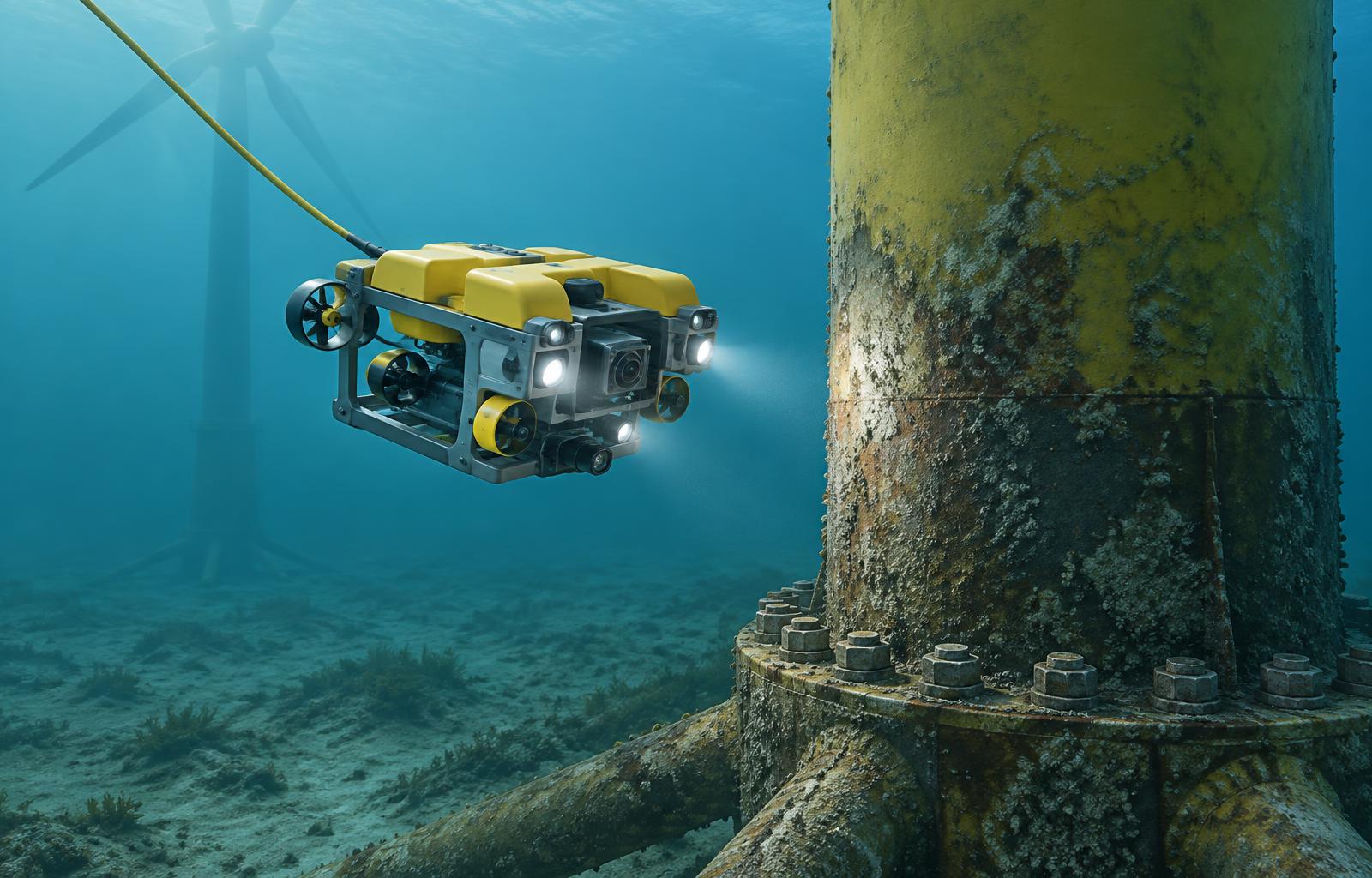
An offshore wind turbine is more than the structure visible above the sea. Underwater foundations, cables and mooring systems also need attention. A University of Limerick-led research project is developing robotic inspection technology aimed at making that work more accessible from land, with machines collecting information below the surface and people interpreting it remotely.
MARINEX brings UL together with Dublin Offshore Technology and Wind Energy Ireland, supported through SEAI's National Energy Research, Development and Demonstration Programme. UL published an October update on the project, which began earlier in 2026 and is due to run until February 2029. The current story is ongoing development, not the launch of a commercial robot fleet.
That stage still matters. Offshore infrastructure requires ways to understand its condition over time, and Irish researchers are working with industry partners on tools for that task. The proposed combination of underwater vehicles, a surface craft, sensor information and digital models connects robotics to a defined engineering need rather than to a demonstration without a practical destination.
The Inspection Challenge Under the Surface
Marine infrastructure is exposed to an environment that can make inspection difficult. People and equipment have to reach offshore locations, gather usable information and understand what they find. The project targets that process, with the intention of reducing reliance on large vessels and offshore crews for inspection activities.
UL identifies marine growth, cracks and structural damage among the features that its proposed AI-assisted analysis is intended to recognise. Cables and mooring systems are also part of the inspection picture. These are different objects with different requirements, so an effective system needs more than a camera moving through the water. It needs a way to relate observations to the structure being examined.
The purpose is to support inspection and maintenance decisions. It is not an announcement that the robots can autonomously repair every turbine or replace every specialist offshore worker. Knowing the condition of equipment is one part of maintaining it; carrying out a repair is another. MARINEX's stated focus is gathering and interpreting inspection information.
That is a practical starting point for robotics. The value comes from useful observations, not simply from getting a vehicle underwater. A system has to produce information operators can act on, with enough context to recognise where it came from and what it may mean. The project's digital models and sensor inputs are intended to help connect the inspection activity to that larger engineering picture.
It also gives the research a clear boundary. Inspection technology can help people decide where attention is needed, but the eventual maintenance response depends on the asset and the finding. A clearer view of equipment is useful without implying that every repair becomes simple. That separation between gathering evidence and carrying out work helps explain the project's role within a wider offshore operation.
How the Robotic System Is Intended to Work
UL describes a combination of underwater remotely operated vehicles and an unmanned surface vehicle, supported by turbine sensor data and three-dimensional digital models. Land-based operating centres form part of the proposed approach. The idea is to bring several sources of information together so that the infrastructure can be examined with less dependence on people travelling offshore for every inspection activity.
The underwater vehicles provide a way to examine equipment beneath the surface. The surface craft adds another part to the operating arrangement. Sensors and digital models help put the collected information into context. These components are being developed as a system, rather than as unrelated pieces of equipment that happen to be used near a turbine.
AI-assisted analysis is intended to help identify relevant features in the inspection material. That does not establish a verified detection rate or demonstrate that every type of fault can be found under every sea condition. The October announcement sets out the capability the researchers aim to develop. Performance needs to be assessed through the project's work rather than inferred from the presence of AI in its description.
Remote operation also needs to be distinguished from complete autonomy. A remotely operated vehicle can allow a person to work from elsewhere while still depending on human control and judgement. MARINEX's land-based operating concept is therefore not a promise that people disappear from the process. It is a proposed change in how inspection information is gathered and where operators can be located.
An Irish Academic and Industry Partnership
Dr Edin Omerdic at UL's Centre for Robotics and Intelligent Systems leads the project. The university contributes a research setting focused on robotic and intelligent systems, while the partnership brings in companies and organisations with a direct connection to offshore wind and marine engineering. That combination links technical development with the conditions in which the tools may eventually be used.
Dublin Offshore Technology contributes expertise in mooring systems and marine operations, according to UL. The university also refers to the company's patented Load Reduction Device technology. That is relevant experience from the industry partner; it should not be confused with a claim that the whole MARINEX inspection system is itself a finished patented product.
Wind Energy Ireland's project record gives a duration of March 2026 to February 2029. That timeline helps frame the October news correctly. It is a research update during an active programme, not evidence that development began on the day the story appeared. Nor does the timetable guarantee a commercial service at its end. It identifies the period within which the research work is planned.
The partnership gives the project a stronger basis than a purely speculative idea. It connects a robotics research team with relevant engineering and industry knowledge, supported through an energy research programme. The next evidence will come from what the system demonstrates and how well it addresses inspection needs, not from treating the existence of a consortium as proof that every technical challenge has already been solved.
What Progress Should Look Like
The intended benefits are clear: reduce exposure to difficult offshore conditions, improve the inspection process and limit dependence on large vessels and crews. Those are project aims. The checked announcement does not establish a percentage cost saving, a measured reduction in accidents or a particular operating limit for depth and sea state. Those figures should not be invented to make the story sound more complete.
A constructive way to follow the work is to ask what can be demonstrated. Can the system collect information that is useful to operators? Can observations be connected reliably to the relevant asset? How does the remote operating arrangement work under the conditions being tested? These questions turn a broad promise of smarter inspection into concrete measures of engineering progress.
The commercial destination remains open in the sources checked. No named paying customer, completed MARINEX offshore deployment or commercial inspection contract is established by the October update. That does not make the work unimportant. It simply places it at the development stage, where the objective is to build and evaluate capability before claiming an established service.
For Ireland, developing that capability is a positive story in its own right. Marine robotics can bring research expertise into a sector with a defined need for inspection and asset information. The offshore wind connection gives the engineering a clear purpose, while the Irish partnership offers a route for combining academic work with practical knowledge. The value is in preparing better tools and proving what they can do.
The Bottom Line
MARINEX is an active Irish-led effort to develop robotic inspection technology for offshore wind infrastructure. UL and its partners are combining underwater vehicles, a surface craft, sensor information and digital models, with work planned through February 2029. Safer and more efficient inspection is the aim, not a result already quantified in the announcement. The project offers a clear example of robotics applied to an important engineering task, with demonstrations and measured performance the next milestones to watch.
AI & Innovation Pulse is an independent Irish digital title covering artificial intelligence and innovation. Every piece is written in-house, editorially independent, and verified.