Inside Cork's Tyndall: The Lab Helping Europe Build Chips Beyond 2nmHow an Irish research institute earned a seat at the heart of Europe's chip future.
“The chips of the 2030s are being designed now — and some of that work is happening in Cork.”
Every few years the world's chipmakers manage to squeeze more transistors onto a sliver of silicon, and every few years people predict they are about to hit a wall. The latest frontier is the move beyond two nanometres — a scale so small that engineers are now working with structures only a handful of atoms across. Getting there takes some of the most expensive, precise equipment ever built, and no single country in Europe can do it alone.
That is why the European Union has been building shared pilot lines: large, collaborative facilities where the next generation of chip technology is developed and tested before it goes into factories. And in February 2026, when the biggest of them, NanoIC, officially opened, one of its partners was an Irish research institute based in Cork: Tyndall National Institute.
What Tyndall Is
Tyndall is one of Europe's major research centres for deep tech, specialising in the materials, devices and systems that sit underneath modern electronics and photonics. Based at University College Cork, it works across chip technology, photonics, sensors, energy and quantum, and partners with both multinational companies and Irish start-ups.
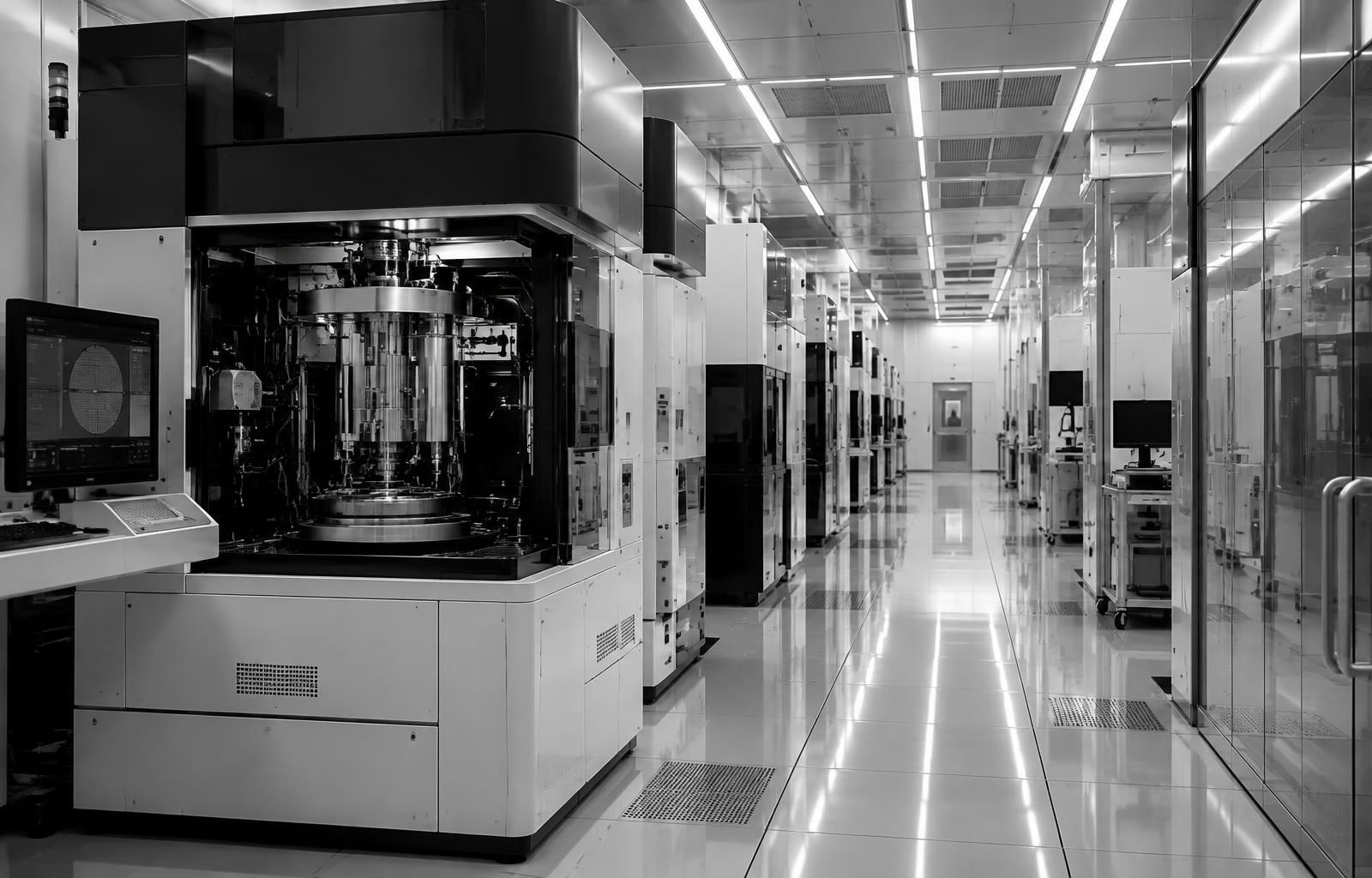
What makes Tyndall unusual in an Irish context is that it does not just study technology on paper. It has its own cleanroom and fabrication facilities, meaning researchers can actually build and test prototype devices. That hands-on capability is exactly what European partners need when they are developing chips that do not yet exist anywhere in the world.
Over the years Tyndall has also become a training ground. Many of the engineers now working in Ireland's semiconductor and photonics companies passed through its labs, and many Irish deep tech start-ups have used its facilities to build their first prototypes.
NanoIC: Europe's €2.5 Billion Bet on the Next Chips
NanoIC is a €2.5 billion European pilot line focused on chip technology beyond two nanometres. It is coordinated by imec, the Belgian research centre widely regarded as one of the world's most important labs for semiconductor research, and backed under the EU Chips Act together with national governments.
The purpose of a pilot line is to bridge the gap between research and production. Universities and labs can invent new chip designs and materials, but factories will only adopt them once they have been proven at scale on real equipment. NanoIC gives European companies, start-ups and researchers access to that proving ground, so that breakthroughs made in Europe can be turned into products in Europe.
Tyndall has described itself as a key partner in the NanoIC pilot line, strengthening Europe's semiconductor future. In practical terms, that means Irish researchers are contributing expertise and facilities to one of the continent's flagship chip programmes, and Irish companies gain a closer route into it.
For a country of just over five million people, that is a remarkable position to be in. The most advanced chip research in Europe is concentrated in a small number of places, and Cork is now firmly on that map.
PIXEurope and the Rise of Light-Based Chips
NanoIC is not Tyndall's only European pilot line. The institute is also part of PIXEurope, a pilot line for photonic integrated circuits running from 2025 to 2030.
Photonic chips use light instead of electricity to move and process information. They are already essential inside the data centres that power AI, where they move huge volumes of data between servers quickly and with less energy. They are also showing up in sensors for healthcare, cars and industry, and they are a key building block for some kinds of quantum technology.
Photonics is an area where Tyndall has built up particular strength over many years, and PIXEurope puts that expertise to work in a Europe-wide effort to make photonic chips easier and cheaper to develop and manufacture. For Irish photonics companies, many of which have grown out of Tyndall or worked closely with it, that is a significant opportunity.
The quantum link was strengthened further when Tyndall was named as a partner in P4Q, a €50 million European pilot project on photonics for quantum, involving partners from 12 countries. Part of that work will be hosted in Cork, tying Tyndall directly into Ireland's Quantum 2030 strategy.
What It Means for Ireland
Tyndall's European roles fit neatly into the bigger picture of Irish chip policy. Silicon Island, the national semiconductor strategy launched in May 2025, puts heavy emphasis on connecting Irish companies and researchers to Europe's chip programmes. In February 2026, Ireland also launched I-C3, its national chips competence centre, to give start-ups and smaller firms easier access to expertise and European facilities.
Tyndall is the natural bridge between all of these pieces. It gives Ireland a credible, hands-on research partner that major European programmes want to work with, and it gives Irish companies a local route into facilities that would otherwise be far out of reach.
It also helps Ireland move up the value chain. For decades, much of the country's chip story has been about manufacturing. Pilot lines like NanoIC and PIXEurope are about invention — deciding what the chips of the 2030s will look like. Having an Irish institute inside that process means more of that future value can be created, and kept, here.
And there is a talent story too. Every major European project that runs through Cork brings with it researchers, engineers and students who build skills on the most advanced technology in the world. Those people go on to found companies, join multinationals or lead the next wave of research.
The benefits also reach well beyond Cork. Companies across Ireland, from Dublin to Limerick to Galway, can draw on Tyndall's facilities and its European connections, and the institute works with firms of every size, from global multinationals to single-founder start-ups with a prototype and a plan.
There is a quiet economic logic here, too. Chip research is expensive, and few countries can afford to build world-class facilities entirely on their own. By pooling resources through European pilot lines, Ireland gets access to equipment and expertise worth billions, while contributing its own specialist strengths in return. It is a partnership model that plays directly to the strengths of a small, open economy.
And the timing is good. Demand for more powerful and more energy-efficient chips is rising fast, driven by artificial intelligence, electric vehicles, medical devices and the rollout of advanced communications. The technologies being developed on pilot lines like NanoIC and PIXEurope are the ones that will meet that demand over the next decade.
For students weighing up a career in science or engineering, Tyndall offers a powerful example of what is possible without leaving Ireland: world-leading research, international collaboration and a direct line to the industries shaping the future.
Seen from the outside, a cleanroom in Cork might not look like the front line of global technology. But the decisions made in labs like these, about which materials to use, which designs work and which processes can scale, will shape the devices people use every day for years to come.
The Bottom Line
Tyndall National Institute has quietly become one of Ireland's most important deep tech assets. As a partner in NanoIC, Europe's €2.5 billion pilot line for chips beyond two nanometres which opened in February 2026, and in the PIXEurope photonics pilot line running to 2030, the Cork institute is helping to shape what the next generation of chips will look like. Add its role in the €50 million P4Q quantum photonics project, and Tyndall sits right where Ireland's chip strategy, quantum strategy and Europe's industrial ambitions meet. For a small country, that is a genuinely outsized seat at the table — and a strong foundation for Irish chip innovation in the decade ahead.
AI & Innovation Pulse is an independent Irish digital title covering artificial intelligence and innovation. Every piece is written in-house, editorially independent, and verified.