Quantum 2030 Gets Its Game PlanWhat Ireland's new quantum roadmap means — and how it's going so far.
“A strategy tells you where you want to go. An implementation plan tells you what happens on Monday morning.”
Quantum computing has a habit of sounding either like magic or like a distant dream. The truth is somewhere in between. The technology is real, it is advancing quickly, and countries are now competing hard to make sure they have the skills, companies and research to benefit when it matures.
Ireland set out its own ambitions in Quantum 2030, the national quantum strategy. In July 2026, those ambitions got something just as important as the vision itself: a practical game plan. Minister James Lawless published a 12-month implementation plan for the strategy, with actions and milestones beginning in the third quarter of 2026. Here is what that means, and how it connects to the quantum work already happening across the country.
From Vision to Delivery
Quantum 2030 set a long-term direction: build Ireland's strength in quantum research, grow a quantum industry, develop the skills the sector will need and connect Irish researchers and companies into international programmes. Like any national strategy, its value depends on what actually happens next.
That is what the new implementation plan is for. Rather than restating the vision, it sets out specific actions for a defined period — 12 months — with milestones starting in Q3 2026. It gives government departments, agencies and research bodies clear responsibilities and a timeline to work to, and it gives everyone watching a way to check whether things are on track.
The shorter time frame is a smart choice. Quantum technology moves fast, and a plan written for a decade would quickly go out of date. A rolling, year-long plan allows the State to respond to breakthroughs, new European programmes and new opportunities as they arise, while keeping the longer 2030 goals in view.
It also reflects a wider shift in how Ireland approaches deep tech. Rather than big announcements followed by silence, the emphasis is increasingly on regular, measurable delivery — a 'how is it actually going' approach that suits a field where progress is steady rather than sudden.
P4Q: Bringing a European Quantum Project to Cork
One of the clearest examples of Quantum 2030 in action is Ireland's role in P4Q, a €50 million European pilot project on photonics for quantum technologies. The project brings together partners from 12 countries, and Tyndall National Institute in Cork has been named as a partner, with part of the work hosted there from 2026.
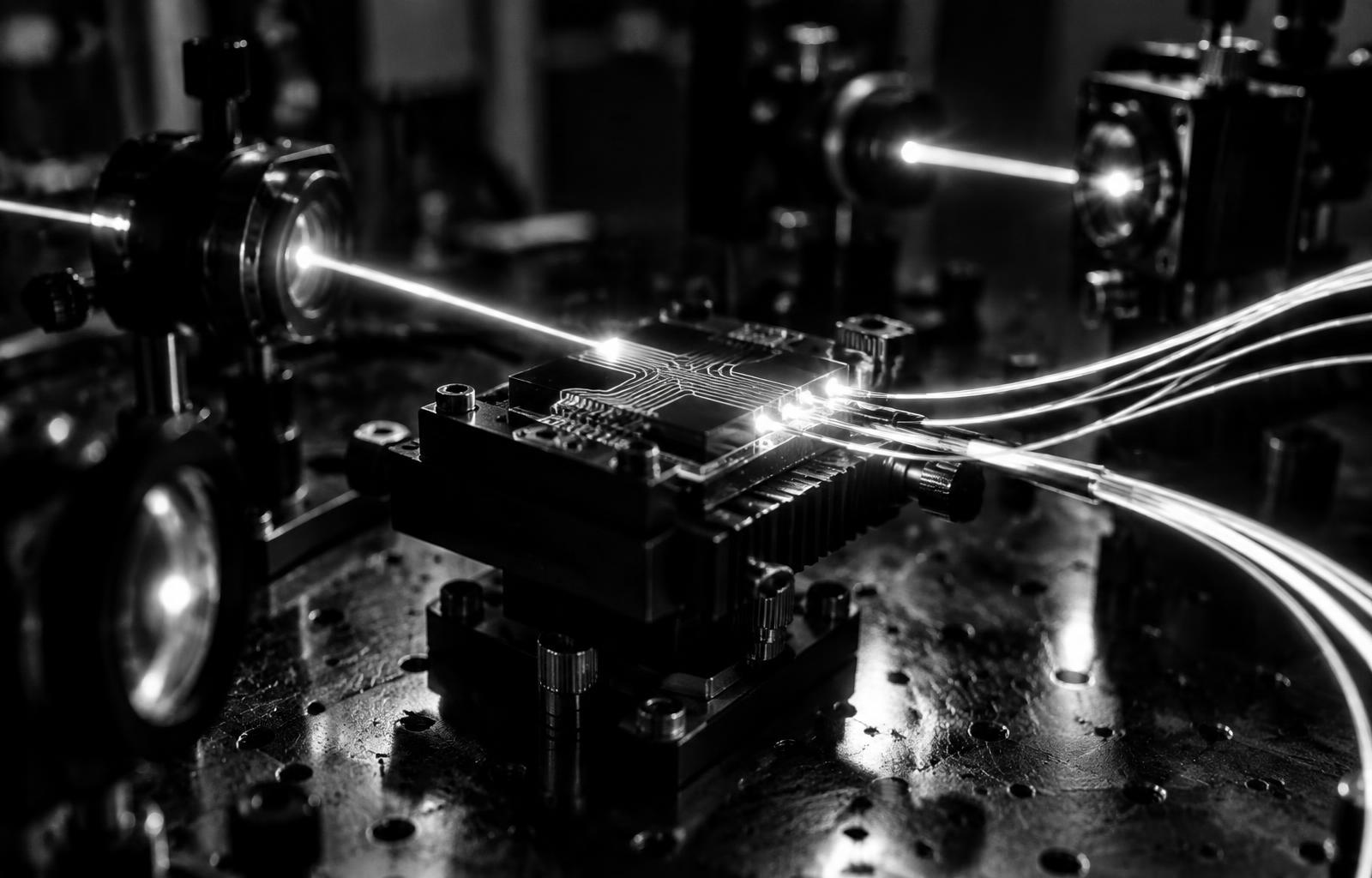
Photonics — the science of generating and controlling light — is one of the key enabling technologies for quantum. Some quantum computers use particles of light as their qubits. Many others rely on lasers and optical components to control and read out their qubits. And quantum communication, which promises extremely secure ways of sending information, runs on light over optical fibre.
Tyndall has spent years building expertise in photonics, and P4Q puts that strength directly to work on quantum technology. Tyndall itself has described the project as advancing Ireland's quantum and semiconductor ambitions together, which captures an important point: in Ireland, quantum and chips are increasingly two sides of the same story.
Where Quantum Meets Ireland's Chip Heritage
Ireland's quantum strategy does not exist in isolation. It sits alongside Silicon Island, the national semiconductor strategy launched in May 2025, and I-C3, the national chips competence centre launched in February 2026 to support start-ups and smaller firms. Tyndall is also a partner in NanoIC, Europe's €2.5 billion pilot line for chips beyond two nanometres, and in the PIXEurope photonics pilot line.
The link matters because many of the most promising approaches to quantum computing depend on chip-making expertise. The clearest Irish example is Equal1, the Dublin company that unveiled Bell-1, a silicon-based quantum server that fits in a standard data centre rack, in March 2025. In January 2026 Equal1 raised $60 million in a round led by the Ireland Strategic Investment Fund, bringing its total funding to more than $85 million.
Equal1's approach — building quantum processors on silicon using conventional semiconductor processes — is exactly where Ireland's four decades of chip experience become a quantum advantage. A country that already knows how to design and make chips at world-class standards has a head start in making quantum chips too.
Put together, the pieces start to form a genuine ecosystem: national strategies setting direction, a research institute plugged into major European programmes, a competence centre helping small firms, and homegrown companies turning research into products.
What to Watch Over the Next Year
Because the implementation plan runs for 12 months with milestones from Q3 2026, the coming year offers a clear window to see how Ireland's quantum ambitions are progressing. Key things to watch include how quickly P4Q work ramps up in Cork, how Irish researchers and companies take advantage of European quantum and chip programmes, and whether more Irish quantum start-ups emerge from university research.
Skills will be central. Quantum technology needs physicists, engineers, software developers and technicians who understand a field that barely existed as an industry a decade ago. Ireland's universities, research centres and companies all have a part to play in building that pipeline.
Investment will matter too. Equal1's funding round showed that serious capital is available for Irish quantum companies with a strong idea and a credible path to market. The more companies that follow, the stronger the case becomes for Ireland as a place where quantum businesses can grow.
International partnerships will be another important thread. Quantum technology is a global effort, and no country builds a full quantum industry alone. Ireland's participation in European projects like P4Q gives Irish researchers access to partners, equipment and funding far beyond what a national programme could provide on its own.
There is a clear economic prize at stake. Quantum technologies are expected to open up new possibilities in areas such as drug discovery, materials science, logistics, financial modelling and secure communications. Ireland already has major pharmaceutical, financial services and technology sectors, which means there are plenty of organisations here ready to explore what quantum could do for them once the technology matures.
Public understanding matters as well. Part of building a quantum-ready country is helping businesses, policymakers and students understand what the technology can and cannot do today, so that investment and expectations stay grounded in reality. A clear, time-bound plan helps with that by showing steady progress rather than promising overnight miracles.
Finally, the plan gives Ireland a way to measure itself. With milestones set out in black and white, it will be possible to look back in a year and see what has been delivered, what has moved faster than expected and where more effort is needed.
The broader lesson is that quantum progress is a marathon, not a sprint. Countries that set clear goals, review them regularly and keep investing steadily tend to be the ones that benefit most when a technology finally breaks through. Ireland's new plan puts it firmly in that camp, with a practical rhythm of delivery that can adapt as the science moves forward and new opportunities appear.
The Bottom Line
Quantum 2030 gave Ireland a vision for quantum technology. The 12-month implementation plan published in July 2026 by Minister James Lawless gives it a practical game plan, with milestones starting in Q3 2026. Tyndall's role in the €50 million P4Q European photonics-for-quantum project brings world-class quantum work to Cork, while companies like Equal1 show how Ireland's chip heritage can become a quantum advantage. The pieces are now in place — strategy, research, European partnerships and homegrown companies. The next year is about delivery, and on the evidence so far, Ireland's quantum story is moving firmly in the right direction.
AI & Innovation Pulse is an independent Irish digital title covering artificial intelligence and innovation. Every piece is written in-house, editorially independent, and verified.