The Deal That Reopened Ireland’s Data Centre Grid — And the Fight Over Who Pays For It
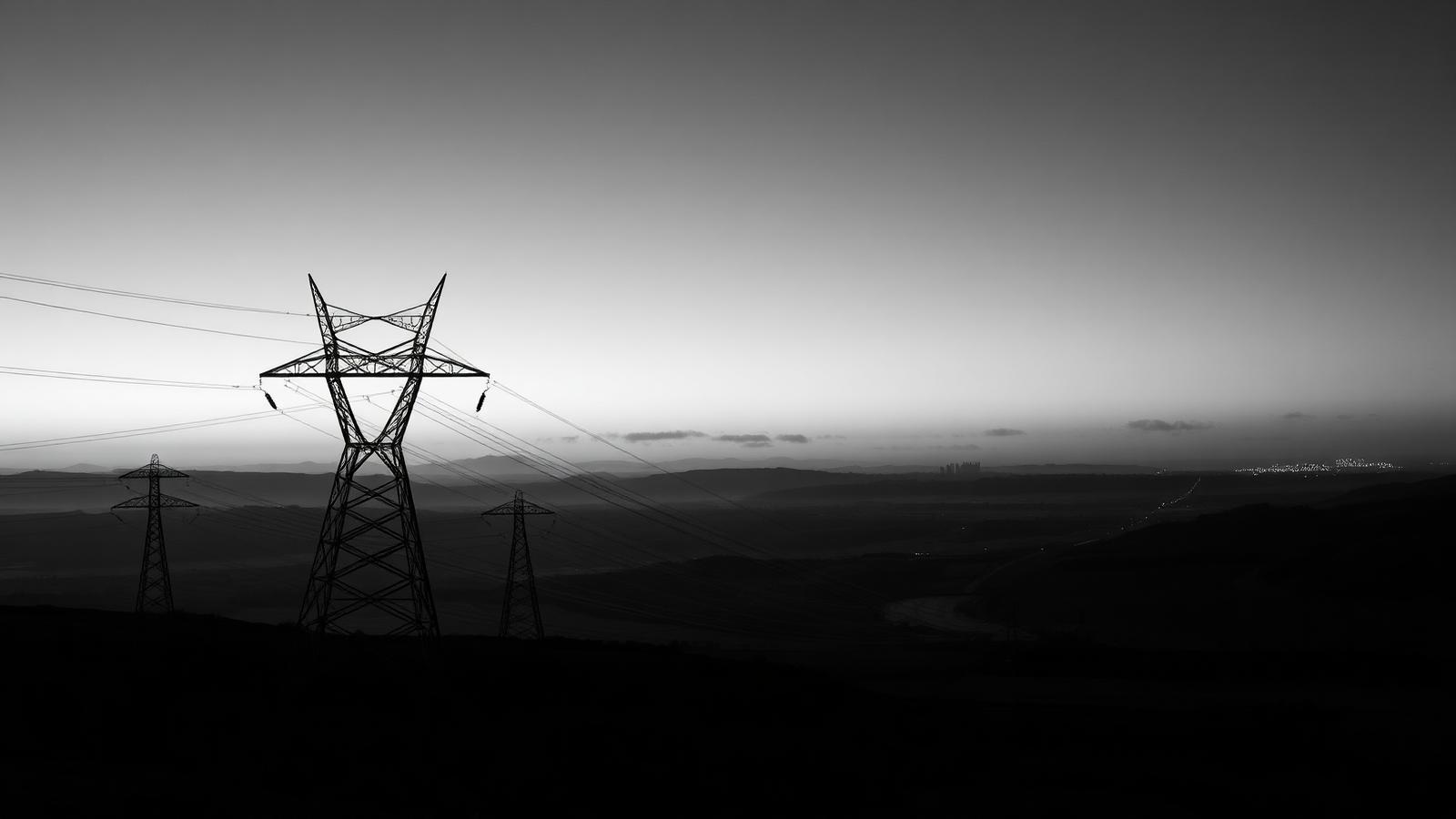
“After a three-year de facto freeze, Ireland has reopened its electricity grid to new data centres. But the new rules have exposed a bitter dispute over who actually pays for the power — and a stark warning from the grid operator that supply may not keep pace with demand regardless.”
After a three-year de facto freeze, Ireland has reopened its electricity grid to new data centres. But the new rules have exposed a bitter dispute over who actually pays for the power — and a stark warning from the grid operator that supply may not keep pace with demand regardless.
Ending the Freeze
In December 2025, Ireland’s Commission for Regulation of Utilities published its long-awaited final decision on data centre grid connections, formally ending what had become a three-year de facto moratorium on new large-scale connections in the Greater Dublin Area. The freeze had been a reactive measure: by 2021, the volume of data centre connection requests threatened to overwhelm the grid’s capacity to reliably serve homes, hospitals, and schools.
The replacement policy introduces a tiered system built around a clear central bargain. Any new data centre seeking a connection of 1 MVA or more must now demonstrate that at least 80% of its annual electricity demand will be met by new renewable energy projects located within the Republic of Ireland. New connections must also, in many cases, be capable of exporting power back to the grid during system stress, and system operators EirGrid and ESB Networks were granted authority to reject sites that don’t meet the new supply requirements. The CRU’s own policy paper flagged a potential need for approximately 5.8 GW of additional data centre demand capacity in the medium term — close to Ireland’s entire all-time peak electricity demand of just over 6 GW.
Why the Grid Got Here
Data centre electricity demand in Ireland grew from just 5% of national consumption in 2015 to 22% by 2024, and EirGrid’s own forecasts project demand rising from 9.4 TWh in 2025 to 14.6 TWh by 2034. Some projections, including analysis cited by the International Energy Agency, suggest data centres could account for as much as 32% of Ireland’s total electricity supply by the end of 2026. Approximately 97% of Ireland’s data centres are located in the Dublin region, where they already account for roughly half of all local electricity demand.
EirGrid’s All-Island Resource Adequacy Assessment, published in February 2026, delivered a stark warning alongside the CRU’s more permissive policy: electricity demand is projected to exceed supply capacity during peak periods across 2026 to 2028. Energy analysts point out that Ireland now effectively has two regulatory bodies working from different playbooks — the CRU governs who is permitted to connect, while EirGrid governs whether the system can actually supply them.
The Charging Row
The reopened connection policy has reignited a pointed political argument about who bears the cost of grid infrastructure. Analysis published by opposition parties in early 2026 highlighted a significant disparity: Irish households pay approximately 7.6 cents per kWh in network charges, while data centres pay closer to 0.7 cents per kWh in equivalent charges. Labour’s climate spokesperson Ciarán Ahern has called for a dedicated data centre levy to offset network costs falling on the roughly 500,000 Irish households already in energy poverty. Both Labour and the Social Democrats tabled Dáil motions in June 2026 calling for a fresh moratorium debate.
The Backup Power Question
Under the December 2025 decision, many new data centres are required to carry significant on-site backup generation as a condition of connection. Ireland’s first grid-compliant behind-the-meter microgrid surfaced in Dublin in April 2026, offering an early test case for how this model performs as the wider adequacy gap begins to bite. Government policy is explicit that fully “islanded” data centres, disconnected from the national grid entirely, are not consistent with national energy policy.
What This Could Mean for Ireland
Data centres and their associated ecosystem now employ close to 30,000 people directly in Ireland, and the sector is deeply intertwined with corporation tax revenues underpinning a significant share of Exchequer finances. The Government’s response includes a landmark €18.9 billion investment package for the national electricity grid, planned for 2026-2030, framed by Minister Darragh O’Brien as necessary to provide the certainty of supply needed for continued expansion. Whether that investment lands quickly enough to close the adequacy gap EirGrid has flagged — before Ireland’s reputation as a stable location for AI infrastructure investment takes a hit relative to competing hubs — is likely to be one of the defining energy policy tests of the current government’s term.
The Bottom Line
Ireland has chosen to reopen its data centre grid connections rather than continue a moratorium that was always a temporary fix, betting that a tiered, renewables-linked connection policy can square continued economic growth with genuine electricity system limits. The CRU’s new rules give developers a clearer path than the uncertainty of the past three years — but EirGrid’s own adequacy warnings, an unresolved and increasingly political charging dispute, and a genuinely tight 2026-2028 supply window mean the underlying tension this policy was designed to manage has been reframed rather than resolved.
AI & Innovation Pulse is an independent Irish digital title covering artificial intelligence and innovation. Every piece is written in-house, editorially independent, and verified.