European AI Innovation Month: What Ireland Can Gain Before the November 17 FinaleEurope's month-long AI programme began in Dublin. Its closing summit puts practical adoption, European technology and sector-by-sector opportunities in focus.
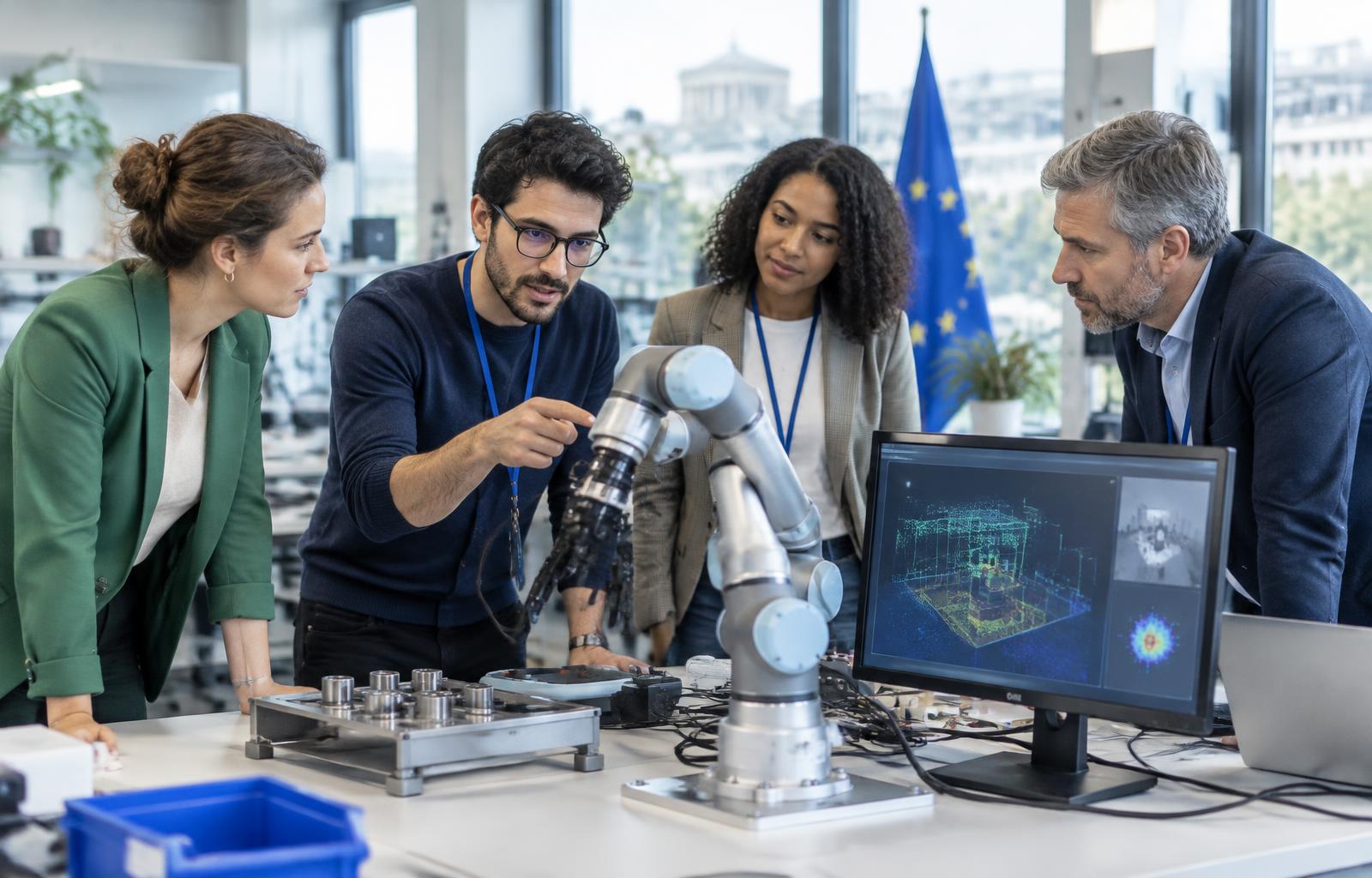
“The useful question is no longer simply what AI can do. It is where it can make a measurable difference.”
European AI Innovation Month is entering its final stretch, with an unusually practical question at its centre: how does Europe turn its AI ambition into technology that businesses, researchers and public services can actually use? The initiative runs from 14 October to 17 November 2026, led by the European Commission in partnership with the Irish Presidency of the Council of the European Union. Its closing event is the Apply AI Summit in Brussels and online on 17 November. That date is the end of the programme, not a deadline for businesses to adopt AI or apply for a general funding scheme.
For Ireland, the significance extends beyond having hosted the opening summit. The programme connects policy, scientific research and industrial adoption through a sequence of events and a shared virtual exhibition. As November begins, the emphasis is shifting towards how AI works in individual sectors. That makes the closing phase relevant to an Irish manufacturer exploring quality control, a healthcare innovator developing a product, or a public-service team considering a carefully supervised trial. The opportunity is to learn from specific applications and find useful collaborators, rather than simply add another conference to the calendar.
A European Programme With an Irish Starting Point
The Commission's programme identifies three flagship summits. Dublin's International AI Summit on 14 October launched the month under the theme of harnessing AI to improve Europe's competitiveness. The AI in Science Summit followed on 15 October, bringing scientific discovery into the discussion. The Apply AI Summit on 17 November will conclude the initiative with a focus on adoption across industry and the public sector. Partner events broaden the programme beyond those three gatherings. This is a coordinated series, not a single exhibition lasting continuously at one venue.
The sequence is important. Scientific progress can create new techniques and capabilities; companies and public bodies then need ways to test and use them. Policymakers have a role in making the conditions for that work clearer. By connecting these communities, the month creates opportunities to discuss the whole journey from research to application. It does not establish that every project on display is ready for commercial deployment, or that every participant has delivered a proven economic benefit. Those questions still have to be answered at the level of an individual product and customer.
Ireland's partnership in the initiative gives the country a visible connection to that European conversation. The current opportunity is to carry the opening momentum into working relationships: a research contact, a potential technology supplier, a cross-border partner or a better understanding of an emerging application. For an Irish organisation, that is a more useful way to assess the programme than the number of prominent names attending. The value lies in whether a contact or demonstration helps solve a problem that already exists in the business.
The November Finale Is About Applying AI
The Apply AI Summit is scheduled for the EGG in Brussels and online. The Commission describes it as marking the first anniversary of the Apply AI Strategy and as a gathering of industrial representatives, policymakers and startups. Its published programme puts European use cases, sectoral adoption and the relationship between innovation and wider policy at the centre. Healthcare, mobility and public services feature in the event's overview, alongside the ambition to show how European AI models and systems can support competitiveness. These are the organiser's stated aims; the summit's results cannot yet be assessed.
The draft agenda makes that sector-based approach concrete. It includes sessions on energy, public administration, frontier AI and cybersecurity, followed by discussions of the AI Act and innovation, robotics, healthcare, and environment and climate. Further sessions cover the workforce, agrifood, media and safety, with mobility, electronic communications, manufacturing and defence also listed. Because this remains a draft programme, readers should check the final schedule before making plans. The range nevertheless shows that the conversation is moving beyond chatbots and towards the different conditions in which AI is expected to work.
The first edition of the Apply AI Startup Award is also part of the planned event, with pitching sessions featuring ten finalists. That offers a way to examine emerging European companies and the problems they are trying to solve. An award appearance is not, on its own, evidence that a product is suitable for a particular Irish customer. It can be a useful starting point for further investigation: what data the system needs, where it has been tested, how it is supported and what the customer would have to change to use it.
Where Irish Organisations Can Find Practical Value
The strongest way into this programme is through a defined business problem. A manufacturer might be interested in identifying defects more consistently; an agrifood business might want to understand how forecasting tools handle changing conditions; a public-service organisation might be exploring assistance with routine information tasks. These are examples of questions to bring to the discussion, not claims that the summit will demonstrate a specific solution for each one. Starting with the problem makes it easier to decide which sessions and exhibitors are relevant, and which are simply interesting.
A useful conversation then needs to move from a demonstration to evidence. Ask where the technology is already operating, what improvement was measured and what work people still perform. Establish whether the reported result comes from a controlled trial, a single customer or a wider deployment. Ask about the cost of preparing data, connecting existing systems and training staff. Those details matter because a promising demonstration and a reliable working service are different things. AI can create genuine value, but the value has to survive contact with the organisation's everyday tasks.
The European emphasis also makes supplier choice worth discussing. Homegrown models and systems are a stated feature of the closing summit, and technological sovereignty appears in its planned discussions. For buyers, the practical interpretation is to ask who operates the service, where information is processed, what contractual protections apply and how easily the organisation can change suppliers. A European provider is not automatically the right provider for every task. The opportunity is to widen the range of options and assess them against the same clear standards of performance, security and support.
Taking Part Before November 17
The Commission's latest published registration notice says in-person attendance is closed. Online registration remains available through a waiting list and is subject to confirmation because of high demand. Irish readers should therefore not assume that either a Brussels place or immediate online access is guaranteed. The official Apply AI Summit page provides the registration route and updated programme. Attendance arrangements can change, so anyone planning to participate should check those details directly before booking travel or setting aside time for a particular session.
The wider month includes a Virtual Conference Platform, described by the Commission as a fair-style environment with a dedicated exhibition linking the summits. The closing summit's virtual platform is presented as an Atlas of the European AI Continent, offering streams of some on-site sessions and opportunities to explore the ecosystem. That wording matters: it does not promise that every physical session will be broadcast. The Commission also provides a partner-event list, while the Apply AI Alliance calendar carries additional stakeholder-led events. These give readers other ways to identify relevant activity without treating one summit as the only entry point.
The useful follow-through can be modest and specific. An organisation could identify one potential collaborator, compare two approaches to a problem, or develop a clearer brief for a limited pilot. Any next step should have a named owner, a defined task and a way of measuring whether the result improves on the existing process. The calendar ending on 17 November does not end that work. If the programme helps an Irish team make a better-informed decision about what to try next, it has created something more durable than conference enthusiasm.
The Bottom Line
European AI Innovation Month ends on 17 November 2026 with the Apply AI Summit, bringing a programme that started in Dublin towards practical questions of adoption. Ireland's opportunity is to use that European connection to find relevant expertise, examine working applications and build relationships around real business needs. The closing agenda is still a programme of planned discussions, not a record of results, and online participation is currently subject to a waiting list. But the direction is useful: less focus on AI as an abstract promise, and more attention to where it can deliver dependable value. The best outcome is not simply attending. It is leaving with a clearer, evidence-based next step.
AI & Innovation Pulse is an independent Irish digital title covering artificial intelligence and innovation. Every piece is written in-house, editorially independent, and verified.