Europe's AI Rulebook Is Now Live: What Changed on 2 August 2026 and Why It Matters for IrelandFor years, AI regulation was a debate. Since August, it has been a working system — and the early signs are more practical, and more positive, than many expected.
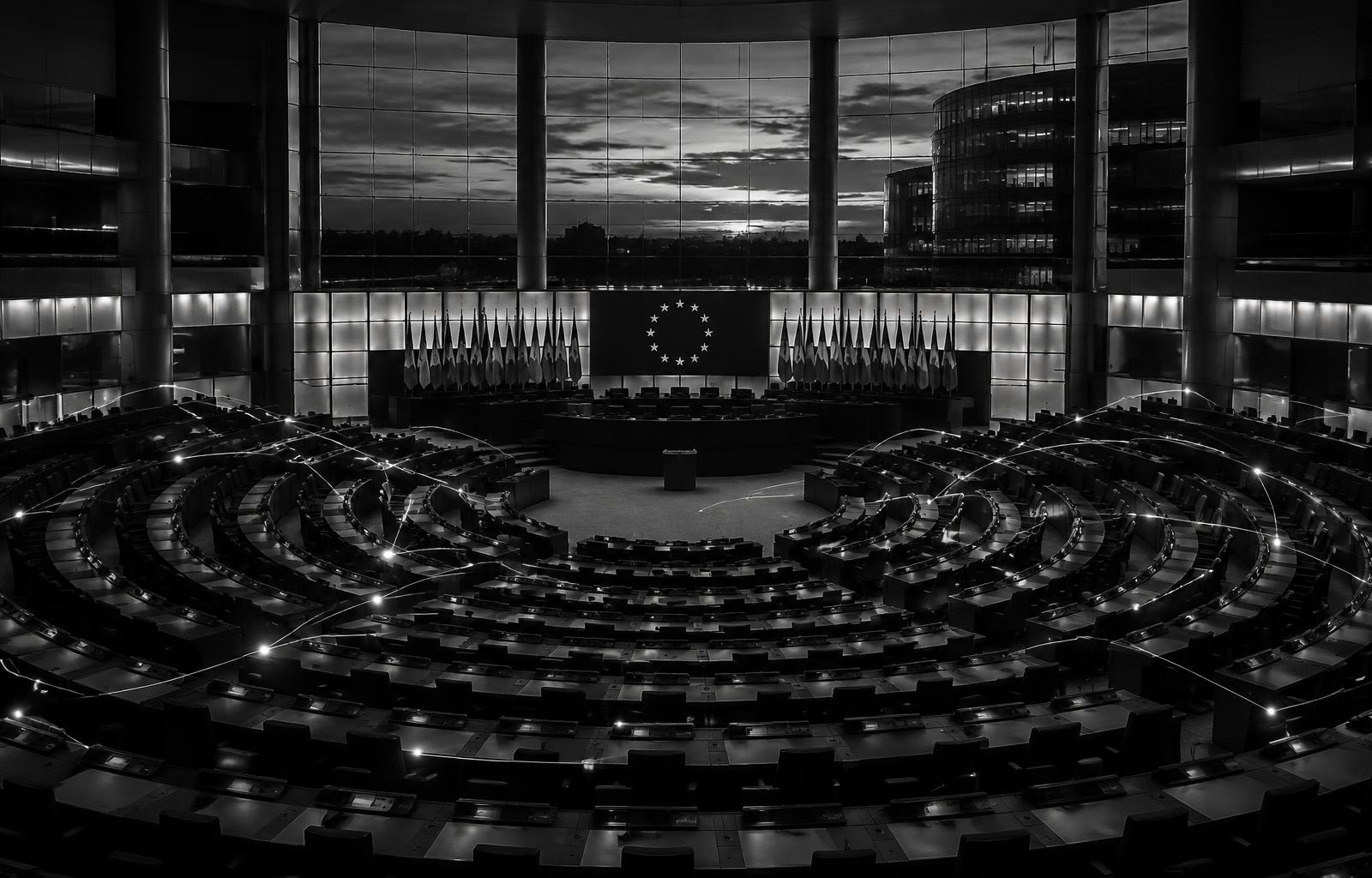
“More than 180 companies have signed up to Europe's code for general-purpose AI — including the biggest names building the models the world uses every day.”
For most of the last three years, talk about AI regulation in Europe has been exactly that: talk. White papers, drafts, trilogues, consultations, open letters and long arguments about whether rules would help or hold back innovation.
That phase is over. On 2 August 2026, the European Commission's power to enforce the EU AI Act's rules for general-purpose AI models came into application. On the same date, the Act's transparency duties — the rules that say people must be told when they are talking to a chatbot, and that deepfakes must be labelled — became enforceable too.
Two days before that, on 31 July, Ireland's own Regulation of Artificial Intelligence Act 2026 came into force, putting a national AI Office in place to coordinate how the rules work here. And in the background, Europe quietly finished a separate piece of work that gives businesses more time to prepare for the toughest part of the law.
Put together, it adds up to the biggest moment yet in the story of how the world's first comprehensive AI law works in practice. This is what has changed, what it means for the companies building and using AI, and why Ireland is unusually well placed in all of it.
From Paper to Practice: What Became Enforceable in August
The EU AI Act entered into force in 2024, but it was always designed to switch on in stages. The first rules — bans on a short list of unacceptable uses, and a duty on organisations to build AI literacy among their staff — arrived in early 2025. The obligations on providers of general-purpose AI models, the large systems that power chatbots and many other tools, have applied since 2 August 2025.
What changed this August is that those general-purpose rules now have enforcement behind them. The Commission's own AI Office can now act on them directly. In plain terms, the companies that build the big foundation models are expected to keep technical documentation, share key information with businesses that build on top of their models, have a policy for respecting EU copyright law, and publish a summary of the content used to train them. The most powerful models carry extra duties around testing, risk assessment and cybersecurity.
The transparency rules matter to a much wider audience. If a business uses an AI chatbot to deal with customers, people should know they are talking to a machine. If AI is used to create realistic images, audio or video of real people or events, that content should be clearly identified. These are simple ideas, and they are the parts of the Act that ordinary people are most likely to notice in daily life.
The Code of Practice: Industry Signs Up
One of the most encouraging signs is how the industry has responded to the General-Purpose AI Code of Practice. The Code is a voluntary rulebook that model providers can sign to show they are meeting the Act's requirements. It was drawn up by independent experts in a process that involved close to 1,000 stakeholders, and it has been endorsed by the Commission and by the AI Board made up of member states.
On 31 July 2026, the Commission published a list of more than 180 signatories. They include the companies behind many of the models Europeans use every day — Amazon, Anthropic, Google, IBM, Microsoft, Mistral AI and OpenAI among them — alongside European names such as Aleph Alpha and Black Forest Labs, and a long tail of smaller firms.
Signatories have also set up a Signatory Taskforce, chaired by the Commission's AI Office, to work through how the Code is applied as models and risks change. That is a practical detail, but an important one. It means the rules are not simply handed down once and left alone; they are being worked through in an ongoing conversation between the regulator and the people building the technology.
For businesses using these models, this is good news. When a provider has signed the Code, customers have a clearer picture of what documentation and assurances they can expect. It lowers the burden on smaller companies that build products on top of big models, because more of the heavy lifting sits with the provider.
More Time Where It Was Needed
The most demanding part of the AI Act covers so-called high-risk AI — systems used in areas such as recruitment, credit decisions, education, critical infrastructure and access to public services. These were originally due to apply in August 2026.
Earlier this year, Europe decided that businesses and standards bodies needed more time to get this right. Through the AI Omnibus, part of the Commission's wider digital simplification package first proposed in November 2025, the rules for stand-alone high-risk systems will now apply from 2 December 2027. High-risk AI built into physical products such as machinery, toys and lifts will follow from 2 August 2028.
The European Parliament gave its final approval on 16 June 2026 and the Council followed on 29 June. The Commission describes the result as a targeted simplification that keeps strong safeguards for people's safety and fundamental rights in place. The same package also added a ban on so-called nudifier apps, which use AI to create fake intimate images of real people.
The effect is a more realistic timeline. Companies get the space to build proper compliance processes instead of rushing, and the technical standards they will rely on have time to mature.
Ireland's Moment: A National Office With a Wider Role
Ireland matters in this story far more than its size would suggest. Many of the world's largest technology companies run their European operations from here, which means decisions made in Dublin carry weight well beyond the island.
The Regulation of Artificial Intelligence Act 2026 — No. 31 of 2026 — establishes Oifig IS na hÉireann, the AI Office of Ireland, as an independent statutory body. It is Ireland's single point of contact for the EU AI Act and the central coordinating authority for how the rules are supervised and enforced here, working with the sectoral regulators that already know their industries.
Crucially, its brief is not only about enforcement. In a Dáil reply on 7 September 2026, the Government set out that the Office also has a key role in promoting AI innovation and literacy, and in raising public awareness about how AI systems are used and the rights people have. On 21 September, the Cabinet heard that Paul Byrne is the Office's Chief Executive, and Minister for Enterprise Peter Burke described the new body as one that will help develop trust in the technology.
The Irish Act also gives the Office the power to set up AI regulatory sandboxes, where companies can test new AI products under supervision before they reach the market. For a country that wants to be a place where AI is built as well as used, that could prove one of the most valuable tools in the whole framework.
The Bottom Line
Europe's AI rulebook has moved from argument to operation, and the early picture is encouraging. The rules for the biggest AI models now have enforcement behind them, the leading developers have signed up to a shared code, ordinary people have clear rights to know when they are dealing with AI, and businesses have been given realistic time to prepare for the most demanding obligations. Ireland, with its own AI Act and a new AI Office designed to support innovation as well as oversee it, is in a strong position to show that good rules and a thriving AI sector can grow together. For Irish businesses, the sensible next step is simple: know which AI tools you use, check what your providers have signed up to, and start building the habits that trustworthy AI will require.
AI & Innovation Pulse is an independent Irish digital title covering artificial intelligence and innovation. Every piece is written in-house, editorially independent, and verified.