Ericsson's New Athlone HQ: Why the Midlands Is Building the Networks That Run ThemselvesEricsson is moving its global R&D headquarters to a purpose-built home on the IDA campus in Athlone. Behind the new building sits some of the most important AI work in telecoms.
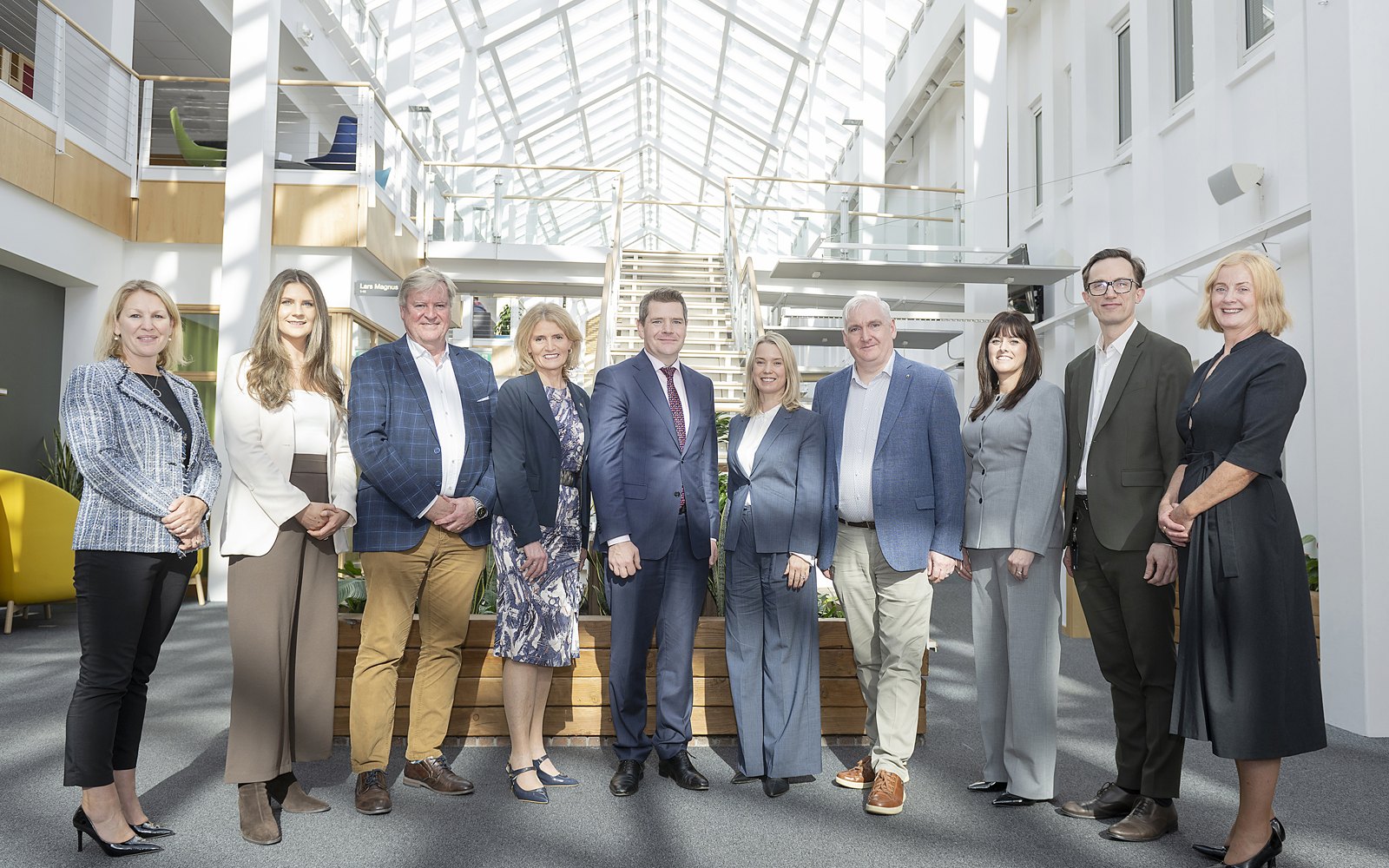
“A new building on the edge of a Midlands town will house the teams teaching the world's mobile networks to run themselves.”
Most people in Athlone know Ericsson as the big employer out at Cornamaddy. Far fewer realise that the site has quietly become one of the places where the future of mobile networks is being written. That story now has a new chapter. Ericsson has confirmed it will move its Athlone research and development site, which serves as its global R&D headquarters, to a new, purpose-built facility on the IDA Ireland Business and Technology Park in Garrycastle.
The formal announcement came on 13 October, with Minister for Enterprise, Tourism and Employment Peter Burke and IDA Ireland Executive Director Mary Buckley alongside Ericsson's Jenny Lindqvist, who heads the company's Cloud Software and Services business area, and John Landy, Head of R&D Site Athlone. Staff had first been told of the plan last December, so October's news turned an intention into a commitment.
The headline numbers are straightforward. More than 1,300 people work at Ericsson in Athlone. The company says it has invested more than €3 billion in the town since 2000. The move is provisionally expected to be complete by 2029, and the company has not signalled any change to staff numbers as a result of the relocation.
But the more interesting story is not the building. It is what the people inside it will be working on, and that is where artificial intelligence comes in.
From Factory Floor to Global R&D Headquarters
Ericsson arrived in Athlone in 1974 to open a factory. Over five decades the site has changed almost beyond recognition, moving from manufacturing hardware to designing the software that runs networks used by service providers in more than 180 countries.
That shift did not happen by accident. It reflects sustained investment from the Swedish company and long-running support from the State through IDA Ireland. In 2025, Ericsson announced a three-year, €200 million R&D investment programme in Athlone, backed by the Government through IDA Ireland and focused on open, programmable and intelligent network capabilities. The new headquarters builds directly on that programme.
When the plan was first shared with staff, Ericsson described the proposed new home as offering 9,000 square metres of office space across two buildings and three floors, designed to be a modern, efficient and sustainable workplace. Detailed architectural design and approvals work ran through the first half of 2026, and by July the company was confirming that detailed planning was continuing. October's announcement, with the Minister and IDA Ireland in the room, marks the point where the project moved firmly onto the path to delivery.
For Athlone, the significance is long-term. A multinational choosing to build a new, purpose-designed headquarters for its global R&D teams is making a decision that looks well beyond the next few years.
The AI Angle: Networks That Manage Themselves
So what exactly will happen in the new building? According to Ericsson and IDA Ireland, the site will house the global R&D teams responsible for creating and delivering AI-driven capabilities to control, monitor, configure and automate telecom networks.
In plain terms, modern mobile networks have become too complex for people to manage by hand. A single operator may run 4G and 5G equipment from several vendors, across thousands of sites, with traffic shifting minute by minute. The industry's answer is the autonomous network: a network that uses AI and machine learning to spot problems, adjust settings and optimise performance with far less manual intervention.
Athlone sits right at the centre of Ericsson's work on this. The company named flagship work on the Ericsson Intelligent Automation Platform, known as EIAP, and AI-powered rApps among the site's key technical focus areas. rApps are small software applications that run on top of the network's management layer, each taking on a particular job, such as balancing traffic, saving energy at quiet times or improving coverage. EIAP is the platform those applications plug into.
The other focus areas listed for the site follow the same thread: AI and machine learning for secure and efficient management of multi-vendor, multi-technology 4G and 5G networks; programmable and autonomous network platforms; cloud-native solutions for next-generation digital infrastructure; and automation and analytics to drive operational excellence and sustainability.
This is applied AI at real scale. It is not a chatbot or a pilot project. It is software that helps keep phone calls connected, card payments flowing and emergency services reachable, built by teams in the Irish Midlands and shipped to operators worldwide.
What It Means for Ireland and the Midlands
For Ireland, the move strengthens a position that often goes unnoticed. Much of the national conversation about AI centres on Dublin, data centres and the biggest US technology names. Ericsson's commitment is a reminder that some of the country's most advanced AI engineering is happening in a regional town, with deep roots in the community.
Minister Burke described the investment as reflecting the confidence leading international companies have in Ireland's business environment, skilled talent base and innovation ecosystem, adding that it cements the Athlone site's position as a centre of excellence for advanced research and development with global impact. Mary Buckley of IDA Ireland called the decision a superb endorsement of Ireland as a location for technology innovation and highlighted the depth of talent available in the Midlands.
Ericsson's own framing points the same way. Jenny Lindqvist said the new facility will empower its teams to develop and deliver AI-enabled software and autonomous network solutions for customers globally, and that the commitment to Athlone reflects the strength of Ireland's talent and collaborative innovation environment.
There are practical knock-on effects too. Ericsson says the new headquarters is expected to deepen collaboration with academic and industry partners and act as a long-term anchor for innovation, skills development and economic growth in the region. For students at nearby universities and for engineers weighing up a career outside Dublin, that is a clear signal: world-class AI and network engineering roles are available in the Midlands, and the company is investing in the space to keep them there.
For Irish businesses, the benefit is indirect but real. More autonomous, more efficient networks mean more reliable connectivity, and Ericsson highlights that its technologies support operators in delivering differentiated connectivity, so they can build and scale new services on top of their networks. The know-how for that is being built in Ireland.
How Is It Going Now?
As of November 2026, the project is moving from announcement into delivery. The relocation is formally confirmed, the destination on the IDA Ireland campus at Garrycastle is set, and the provisional completion date is 2029. The €200 million R&D programme announced in 2025 continues to run alongside it, keeping the focus on intelligent and programmable networks.
The next milestones to watch are visible ones: construction progress at Garrycastle, further detail on the facility's design and sustainability features, and new partnerships with universities and industry that Ericsson has signalled it wants to deepen. Each will show how the company's AI ambitions in Athlone are translating into bricks, people and products.
The Bottom Line
Ericsson's move to a new Athlone headquarters is about far more than a change of address. It locks in more than 1,300 high-skilled jobs, builds on more than €3 billion of investment since 2000, and gives a permanent, purpose-built home to the teams developing the AI that lets the world's mobile networks increasingly run themselves. For a company that arrived in 1974 to make hardware, that is a remarkable evolution. For Ireland, it is proof that globally significant AI work does not have to happen in the capital, and that the Midlands is set to remain part of the future of telecoms for decades to come.
AI & Innovation Pulse is an independent Irish digital title covering artificial intelligence and innovation. Every piece is written in-house, editorially independent, and verified.