Cork's CergenX Gains CE Mark for AI Newborn Brain AssessmentThe UCC spin-out's Wave system has cleared a European regulatory milestone, bringing its research-led clinical decision-support technology closer to wider use.
“Clinical decision support helps the medical team; it does not replace professional judgement.”
Irish medical technology company CergenX has reached an important regulatory milestone for a product built around newborn brain assessment. University College Cork announced on 1 September that Wave, the company's first product, had achieved CE marking under the European Union's Medical Device Regulation. The milestone enables European commercialisation and moves a Cork research story into a new stage.
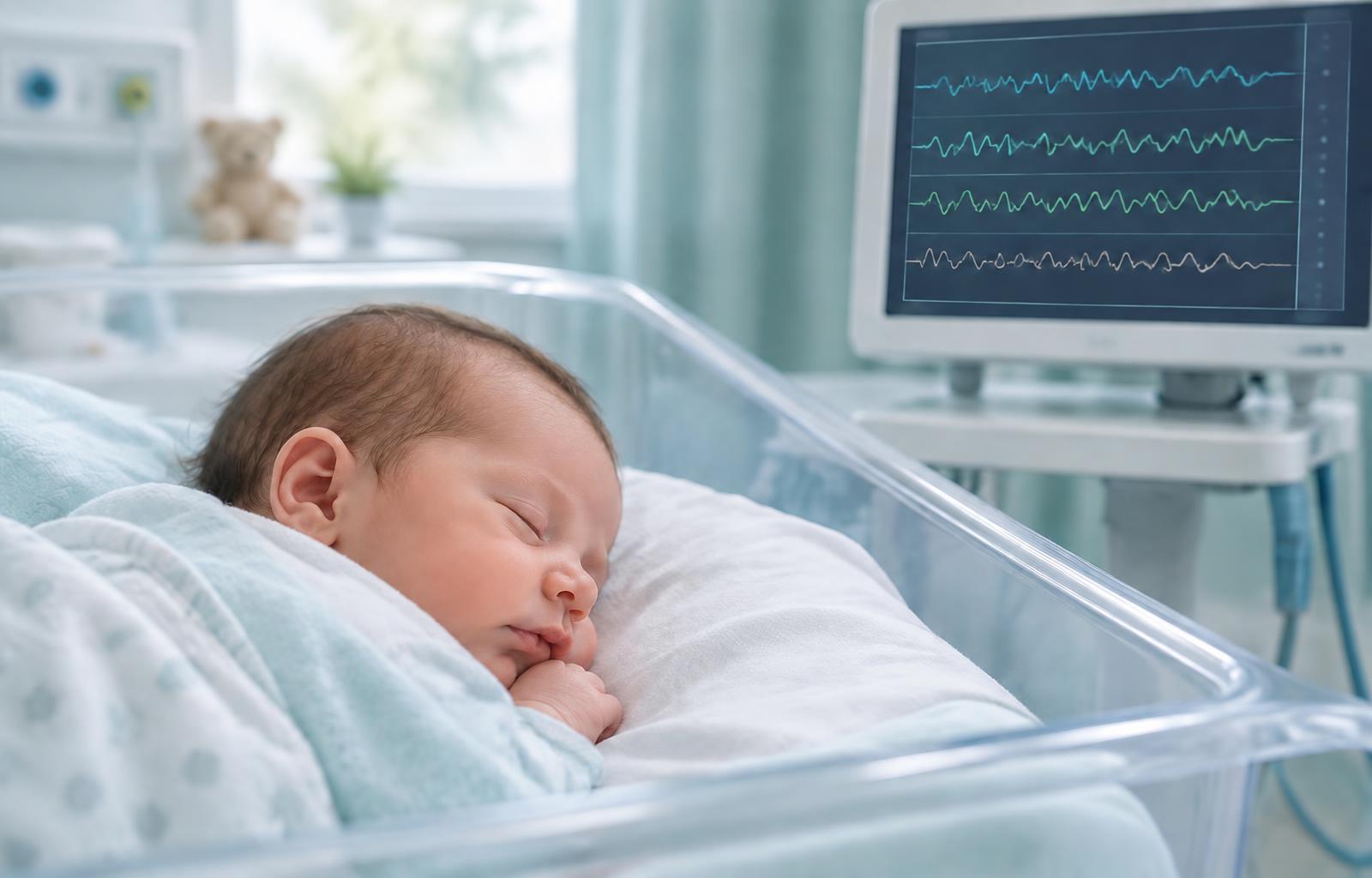
Wave combines electroencephalography, or EEG, with artificial intelligence to provide clinicians with information about newborn brain activity. Its role is clinical decision support: helping a medical team assess information, not replacing the professionals responsible for a baby's care. That distinction is central to the product's purpose and to understanding what the certification establishes.
The announcement does not report widespread hospital adoption or prove that the system has already improved outcomes across Europe. It marks a regulatory step that permits the company to pursue market access. For Irish deep tech, the significance is the movement from specialist research through device development towards a clinical product that can be commercialised.
Turning Brain Signals Into Usable Information
EEG records electrical activity from the brain using electrodes. The resulting signals can provide useful information, but interpretation requires expertise. CergenX's proposition is to make an initial assessment more accessible to clinical teams by combining a relatively compact recording setup with automated analysis.
UCC describes Wave as using four electrodes, an EEG amplifier and a tablet interface. It analyses ten minutes of newborn brain activity, with the AI evaluation returning a result in as little as 30 seconds. The timing needs to be read accurately: the short processing time follows the recording. It does not mean that the entire assessment takes only 30 seconds from the moment a clinician starts.
The company describes its analysis as providing objective information about brain function and EEG abnormalities associated with markers of brain injury. That is not the same as a standalone diagnosis of every neurological condition. Medical findings must be understood in the context of the baby, the clinical examination and the other information available to the team.
A useful clinical tool also has to fit the place where it will be used. The equipment, recording process and presentation of the result are part of that proposition, not incidental extras around an AI algorithm. Wave brings those elements together in a device intended for clinical decision support. The September milestone concerns that product, rather than a general claim that AI can replace neonatal expertise.
This makes the presentation of information important. An automated result needs to be useful within a clinical assessment, not simply technically impressive in isolation. A clinician must understand what the device is intended to assess and what its result does not establish. The product's decision-support description keeps that relationship explicit: information from the recording contributes to a wider medical judgement. It should not be retold as an instruction for families to interpret a baby's condition without professional care.
What CE Marking Changes
The UCC announcement states that Wave achieved CE marking under EU MDR 2017/745. For CergenX, that enables commercialisation across the European market within the product's intended scope. It is a concrete regulatory achievement following the development work described by the company, rather than simply an expression of confidence in the technology.
Market eligibility and market adoption remain different stages. Hospitals and other potential customers still need to assess how a device fits their clinical processes, training requirements and purchasing arrangements. The announcement does not name a complete European rollout, give a hospital installation total or establish that every neonatal unit can now access Wave. Those would require separate evidence.
Chief executive and co-founder Jason Mowles says the company's focus turns to bringing Wave to the European market and putting the technology into clinicians' hands. That wording helps locate the current position. Certification has been achieved; broader commercial access is the next objective. It is more informative to show that progression clearly than to write as though the final stage is already complete.
The same precision applies to the United States. UCC reports that Wave received FDA Breakthrough Device Designation and that CergenX continues towards US market clearance. The designation is not itself marketing authorisation. The European certification and the continuing American regulatory pathway are two separate parts of the company's development, with different statuses in the checked announcement.
Research Built in Cork
CergenX was founded in late 2021 as a spin-out from UCC's INFANT Research Centre. The September 2026 announcement describes a company drawing on decades of neonatal research and combining neurophysiology, artificial intelligence, software engineering and medical device development. Its deep-tech character comes from that combination of specialist scientific knowledge and product engineering.
Professor Geraldine Boylan, co-founder and chief scientific officer, identifies access to EEG assessment as the problem the company was established to address. Her account focuses on giving clinical teams clearer information at the point of care. That is a specific use case, rather than a broad suggestion that AI will transform medicine in every setting at once.
UCC says the Enterprise Ireland-backed High Potential Start-Up has raised more than €11 million in dilutive and non-dilutive funding to support development and commercialisation. That combined figure should not be presented as one venture-capital round, nor as revenue from selling the product. It describes resources raised through more than one funding route for the work of building the business and its technology.
The result is a useful example of research translation. A specialist field supplies the scientific foundation; an organisation is formed to develop a product; engineering and regulatory work bring that product closer to clinical use. None of those steps is automatic. The CE milestone makes one of them visible and gives the Irish innovation story a tangible event around which to assess progress.
Clinical Support, With People Still in Charge
The value proposition is not that a tablet should decide a baby's treatment. Wave is described as supporting clinical decision-making with an assessment of recorded brain activity. Medical teams remain responsible for interpreting findings and deciding what action is appropriate. A system intended to make information more accessible should strengthen that process, not conceal the need for professional judgement.
That matters particularly when writing about newborns. It would be misleading to imply that a device prevents every brain injury or guarantees early detection of every problem. The checked announcement supports a more specific statement: Wave has been developed to provide information about brain function and abnormalities relevant to assessment. Outcome claims need evidence of their own and cannot be inferred solely from a regulatory milestone.
As commercialisation progresses, useful questions include where the device is introduced, how teams are trained and what evidence emerges from use in clinical workflows. Those are normal measures of a medical product's progress. They allow the story to develop through identifiable results rather than by repeating the promise of the original announcement.
For Ireland, the achievement is already meaningful at its proper scale. A Cork spin-out has developed an AI-assisted medical device and cleared a European regulatory step. The company can now pursue a wider market while continuing its US pathway. That is a positive, substantive deep-tech story even without claiming that adoption is complete or that clinical benefits have already been measured everywhere the technology could eventually be used.
The Bottom Line
CergenX's CE marking is a concrete step from Irish neonatal research towards European commercial access. Wave combines a short EEG recording with AI-assisted analysis to support clinicians assessing newborn brain activity. It does not replace medical judgement, and certification should not be confused with widespread adoption or guaranteed patient outcomes. The story to follow now is how the Cork company turns its regulatory milestone into appropriate clinical use, with evidence and professional oversight remaining central.
AI & Innovation Pulse is an independent Irish digital title covering artificial intelligence and innovation. Every piece is written in-house, editorially independent, and verified.